Bullet Factory
Build the factory. Make the bullets. Break the game.
One morning the scrap in the Great Junkyard started to walk. Turn it into bullets before it turns you into scrap.

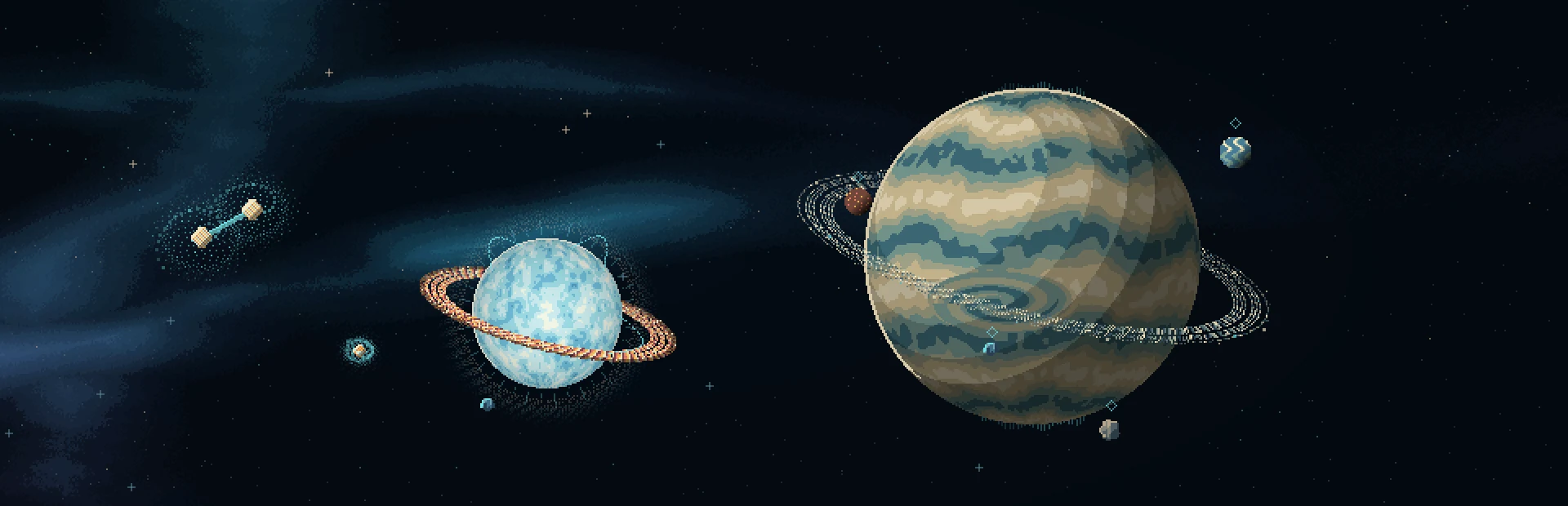

Start with one carbon atom. See how far it goes.
You start with a single carbon atom drifting in the dark. Matter passes by. You catch the pieces that fit, brake the ones that are too hot, dodge the ones that would break you, and slowly something grows.
Thirty stages later you have built either a star that ends as a black hole, or a family of moons circling a giant planet. Which one depends on a choice you make around stage 23, and you can go back and try the other path later.
It's a slow, relaxing game, but not one you can forget in a tab: the bar moves faster when you play, and the universe likes to throw small surprises at you.
Puff says: I tried it. I became a pebble. Very relaxing.
23 shared stages, then 7 for each branch. 37 different stages in total, from a carbon molecule to a gas giant and beyond.
A reticle tells you what each passing body wants: cyan means take it, amber means brake it first, coral means stay away. Some just ask you to look.
39 events, from a passing comet to a supernova far away. Some ask for quick hands (catch, parry, link, tune), some ask you to choose, a few just ask you to look.
Twice per stage, a short challenge asks you to keep a rhythm, hit the right spots or hold a value inside a band. Nail it and you get momentum.
Active play fills your momentum and speeds up the main bar. Leave the game alone and it keeps going at about a third of the speed. Nothing ever blocks.
Upgrades bought with observation data. They help you see better, sort matter and automate the boring parts. The basic commands are free from the start.
Three sliders share 220% of power. Push the flow and things heat up. The game shows what each slider is doing right now.
Science notes for every stage, and a page of memories. The rare moments you catch get drawn in the sky for the rest of the run.
Mouse, keyboard, touch or gamepad buttons. Reduced motion setting. 50 achievements. Autosave every 5 minutes by default (2, 5, 10 or off).
Every run goes through the same 23 stages, then splits in two around a giant planet.
Carbon atom, Carbon molecule, Molecular cluster, Nanograin, Interstellar grain
Porous flake, Icy aggregate, Porous pebble, Compact pebble, Pebble swarm
Primordial planetesimal, Differentiated planetesimal, Planetary embryo, Protoplanet, Magma world, Rocky planet, Super-Earth
Enveloped core, Accreting giant, Gas giant, Ringed giant, Super-Jupiter, Giant at the crossroads
Keep gathering matter, towards stars and stillness.
Growing brown dwarf, Low-mass star, Solar-mass star, Massive star, Evolved stellar core
Stellar black hole, Accreting system
Make room for a family of moons.
Quiet giant, Fertile disk, Family of moons, Resonant architecture, Temperate worlds, Lasting balance, Garden of Worlds
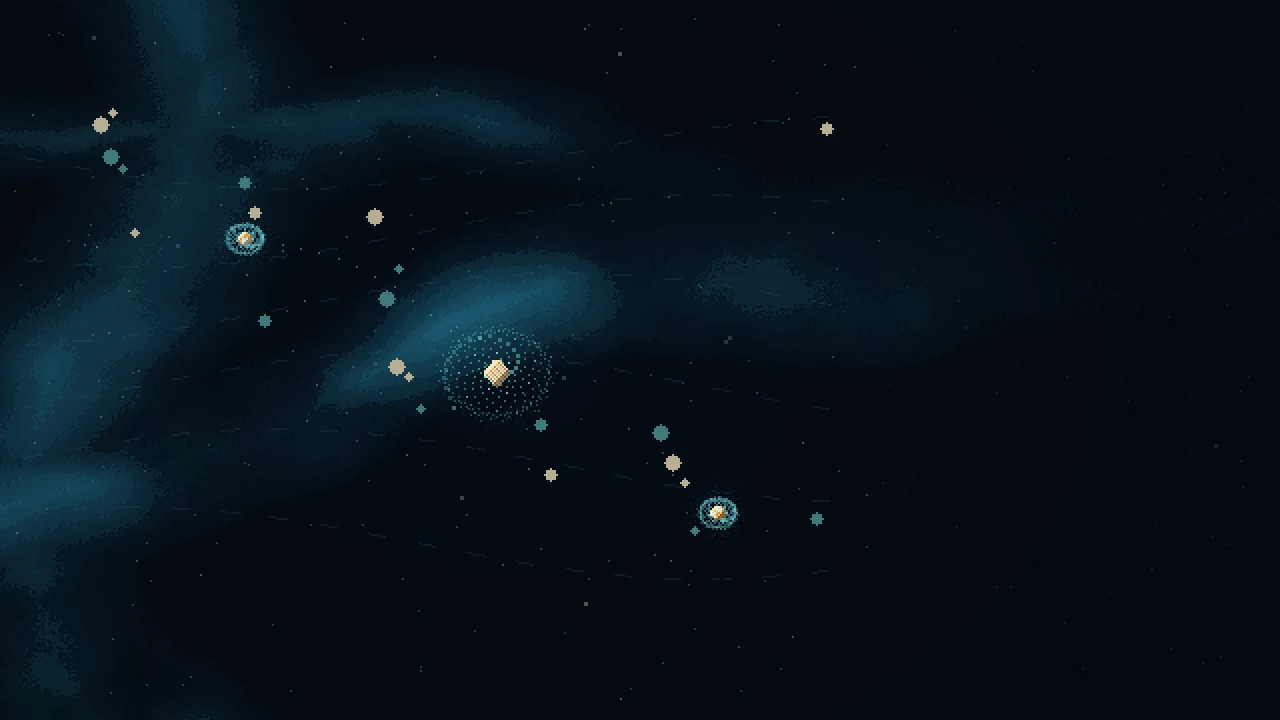
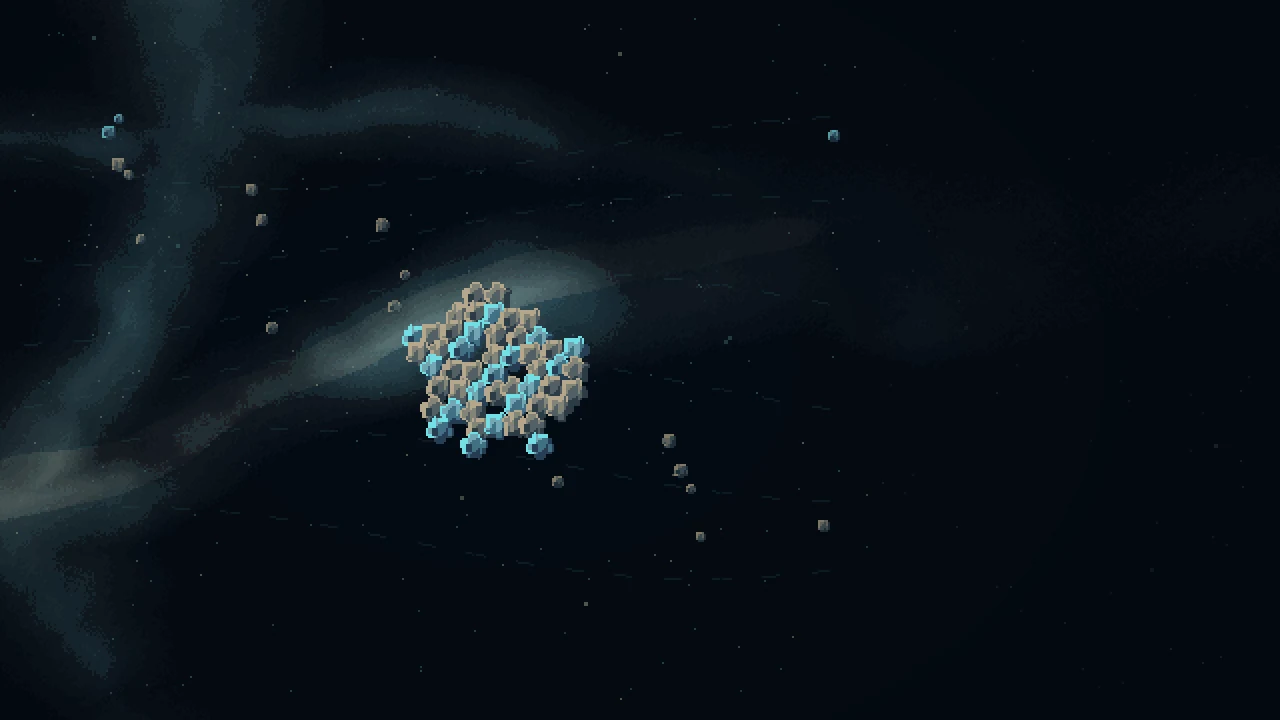
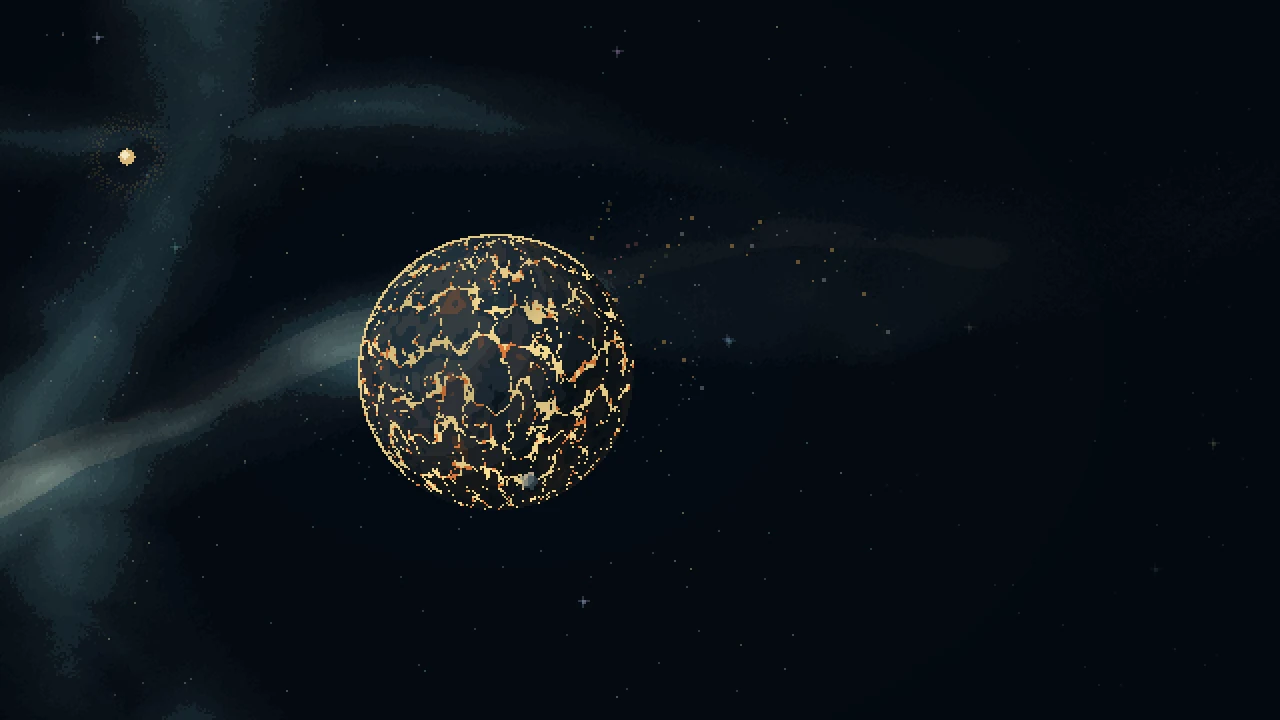
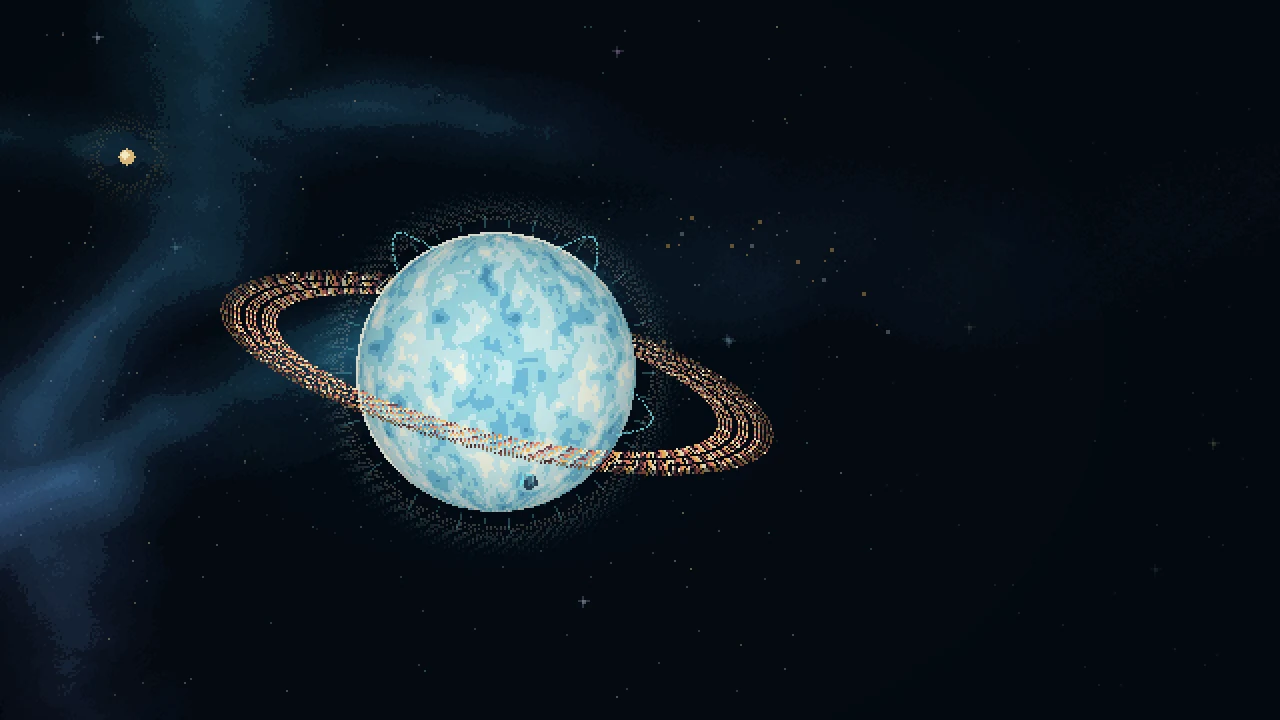
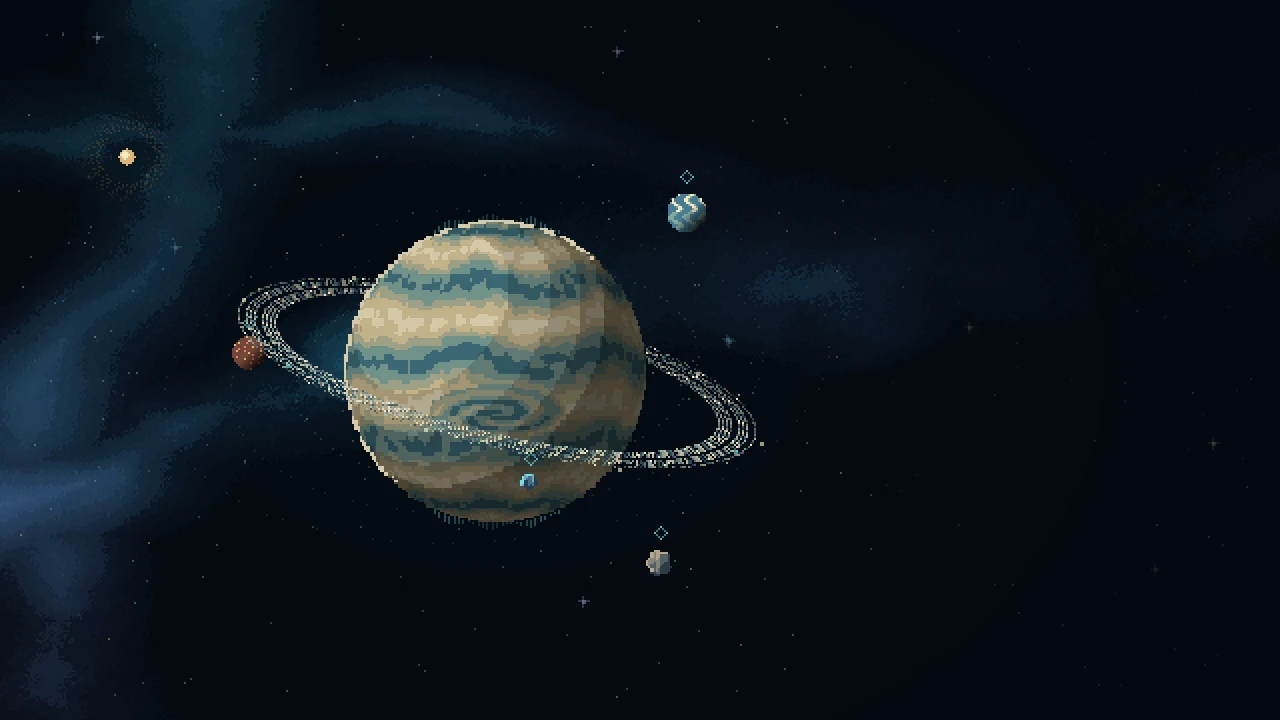
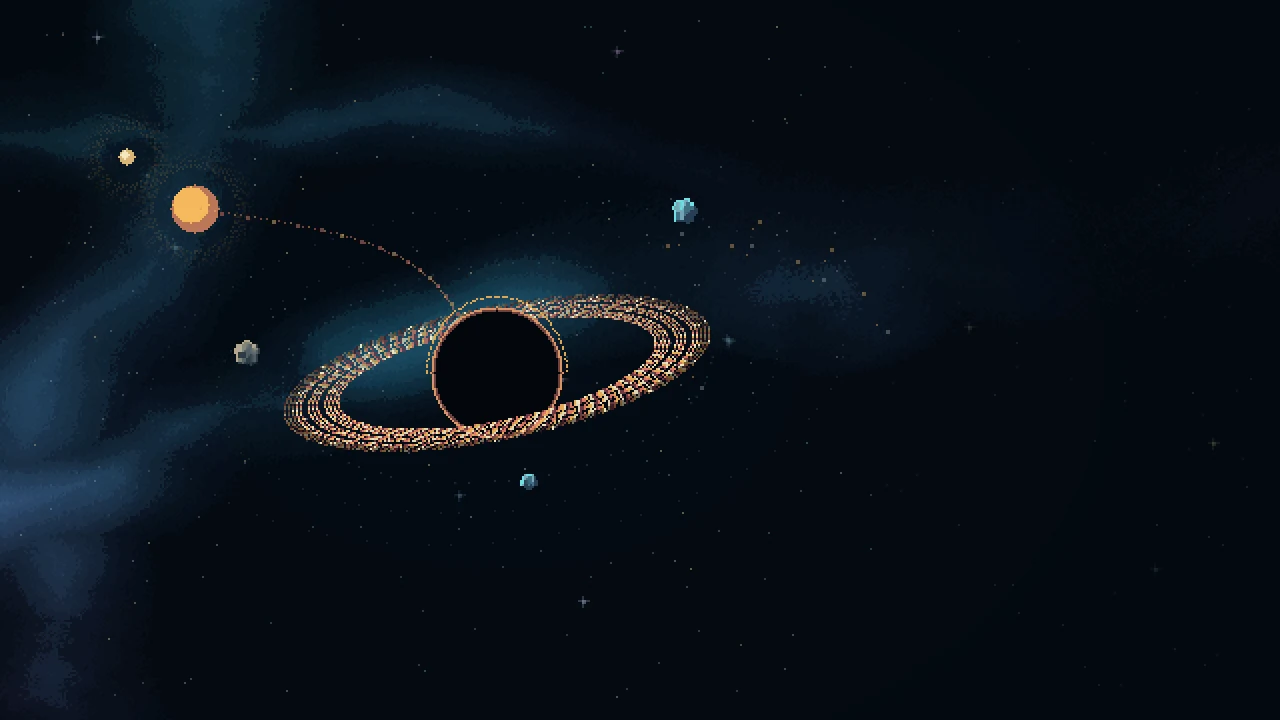
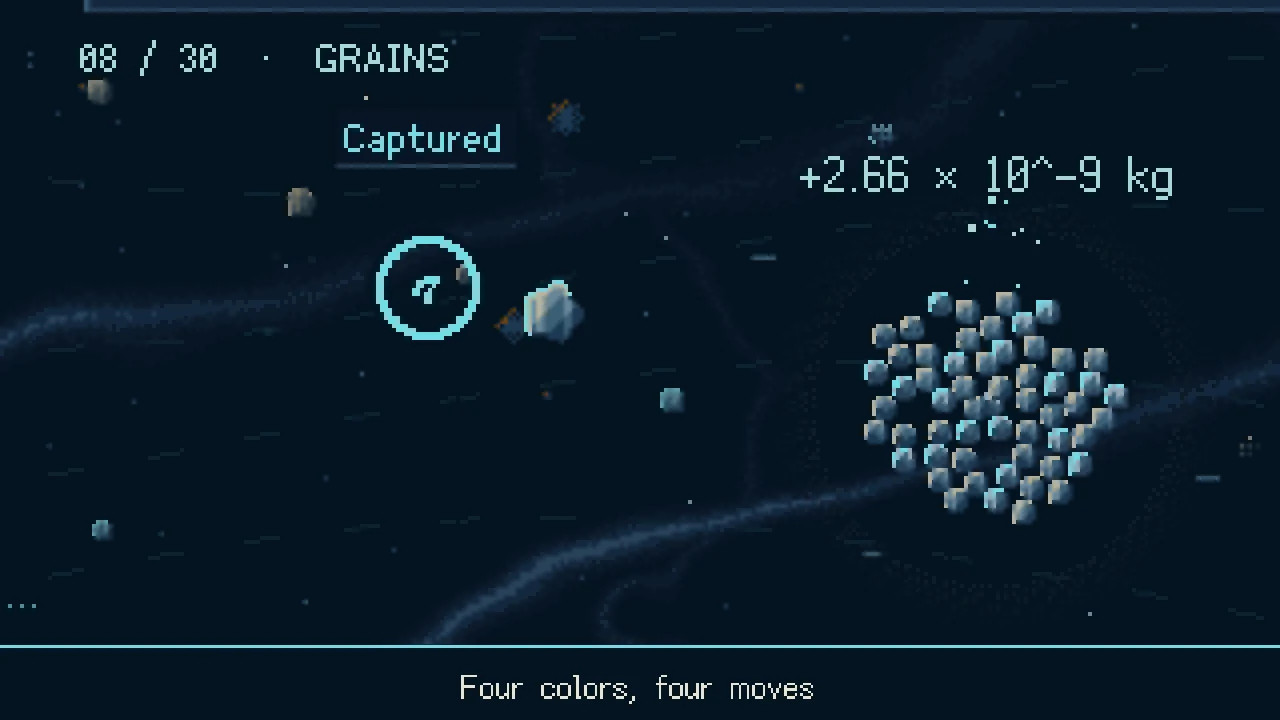
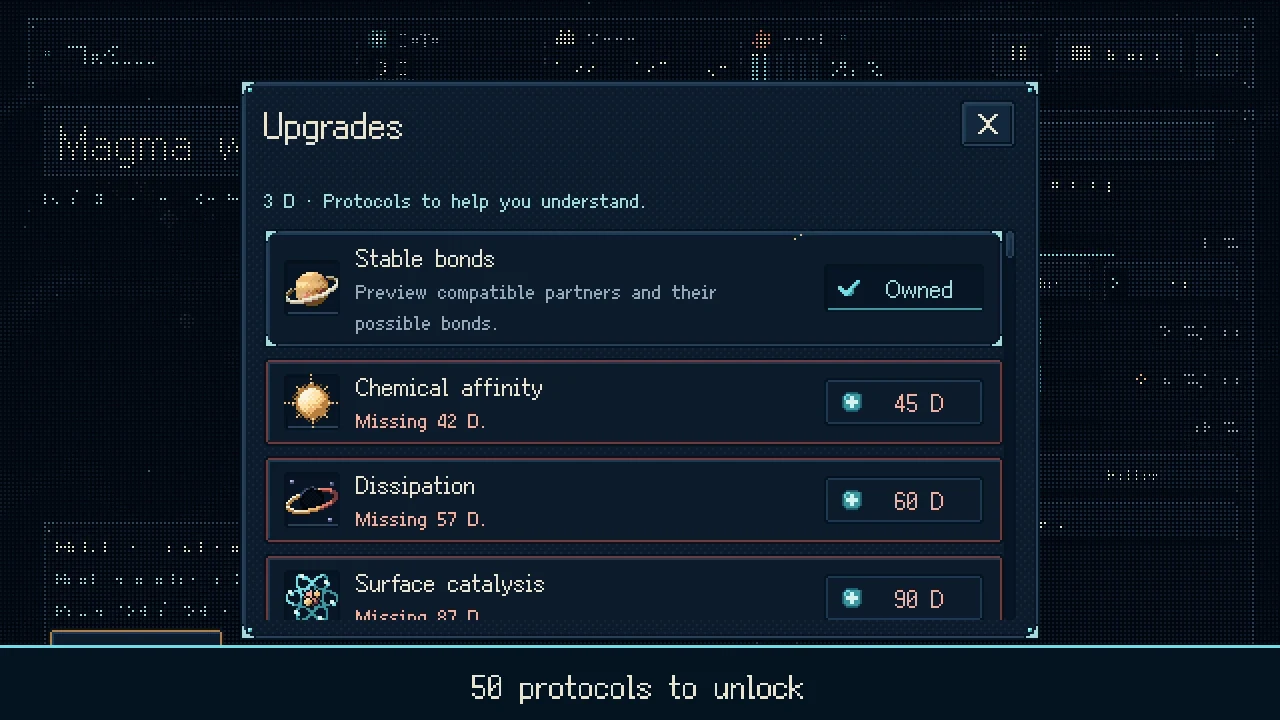
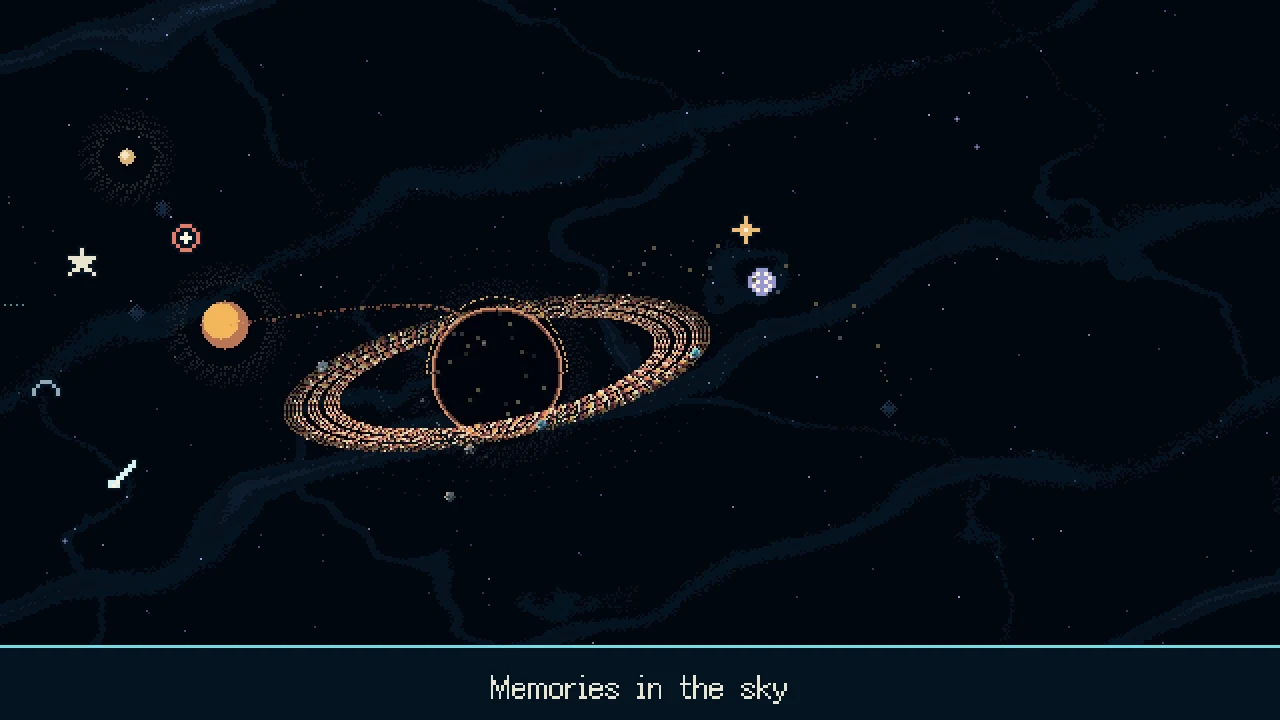
Select a screenshot to open it at full size.
The physics is simplified, and the game says so. Gravity and the speed of light keep their real values and every kilogram is accounted for: matter you collect, moons, ejected debris and mass radiated away. Moons follow real orbital ellipses. Times and distances are compressed, though, and the chemistry is a sketch. Think of your commands as friendly science fiction, not a research tool.
The soundtrack is calm 8-bit chiptune made for the game: 23 tracks, a few long pieces for each part of the universe and short rises for the moments when your world evolves. The tracks are written by a small composing program we built for TheSeed, with fixed seeds, so the same piece always comes out the same. We still want to give them a proper listen with fresh ears before release.
English, French, German, Spanish (Spain), Spanish (Latin America), Portuguese (Brazil), Portuguese (Portugal), Italian, Dutch, Danish, Swedish, Finnish, Polish, Czech, Hungarian, Ukrainian, Russian, Turkish, Japanese, Korean, Chinese (Simplified), Chinese (Traditional), Thai, Vietnamese, Indonesian.
We don't have a date yet. We'd rather tell you when we're sure.
Right now there's a Windows test build that we share with friends and testers. It isn't on any store.
Our automated test player finishes one path in about six and a half hours. That's a robot that never hesitates, so a human will probably take longer. We haven't measured that properly yet.
Partly. Progress continues if you just watch, but much slower, and there's no progress while the game is closed. It's built to be played calmly rather than left running.
Yes. From stage 4 the ordinary encounters resolve on their own (you can switch that off), and missing a challenge never blocks you.
Because everything starts from something tiny. One atom, to be precise.
Build the factory. Make the bullets. Break the game.
One morning the scrap in the Great Junkyard started to walk. Turn it into bullets before it turns you into scrap.